
Dissociation, a complex phenomenon that can affect mental health, is often little known to the general public. As a psychologist, I am particularly interested in how meditation can play an essential role in the reconnection process for those who live with this experience. In this article, we will explore dissociation, its impact on daily life, and how meditation can be a valuable tool to foster a deep reconnection with oneself.

Dissociation, a phenomenon that is still too often misunderstood, can have a profound impact on mental health. As a clinical psychologist, I am particularly interested in gentle approaches that foster reconnection with oneself. Meditation proves, in many cases, to be a genuine support tool. Let us explore together how it can accompany people facing dissociation.
What is dissociation?
Dissociation is a psychological defence mechanism. It frequently occurs after a traumatic event. Concretely, it manifests as a disconnection between different spheres of experience: consciousness, identity, memories, or even body perception.
Those affected often describe a feeling of living at a distance from their own life, as if they were observing things without truly participating in them. This form of disconnection can be unsettling and difficult to explain to those around them.
Consequences for daily life
Dissociation can deeply affect quality of life. For example, it becomes difficult to:
- Stay grounded in the present moment
- Maintain authentic relationships
- Fully feel one’s emotions
- Concentrate or remember certain events
This sometimes creates a feeling of emptiness or floating, and an inner struggle to find meaning again.
When meditation can support… or destabilise
Meditation, although beneficial for many, is not always suitable without adjustment for people experiencing active dissociation. Certain practices, such as very abstract meditations or those centred on mental observation, can reinforce the feeling of floating or disconnection. This can be surprising, or even destabilising.
This is why it is essential to be supported or guided by a trained professional, who knows how to adapt the practice to the person. Body-based grounding techniques, such as the body scan, are often safer. By bringing attention to physical sensations, they facilitate a gentle reconnection with the body, an essential step in stabilising one’s inner state.
How meditation helps with reconnection
Meditation, and more particularly mindfulness, offers a safe space to return to oneself with gentleness. Here are four ways it can foster reconnection:
1. Returning to the present moment
Meditation invites us to pay attention to what is happening here and now. For someone who dissociates, this is a first step towards grounding, which allows the mind to slow down and break the loop of disconnection.
2. Exploring bodily sensations
Through simple body-awareness practices, meditation makes it possible to reweave the link with physical sensations. Little by little, this exploration helps restore a more complete perception of oneself.
3. Observing without judging
One of the pillars of meditation is benevolent observation: welcoming what emerges, without criticism or rejection. This offers a reassuring framework for better understanding what is happening inside, even when it feels unclear or painful.
4. Cultivating mindfulness in daily life
A few minutes a day can be enough to create routines of presence: breathing consciously, feeling one’s supports, listening to a sound… These small repeated gestures strengthen inner stability.
A gentle path towards healing
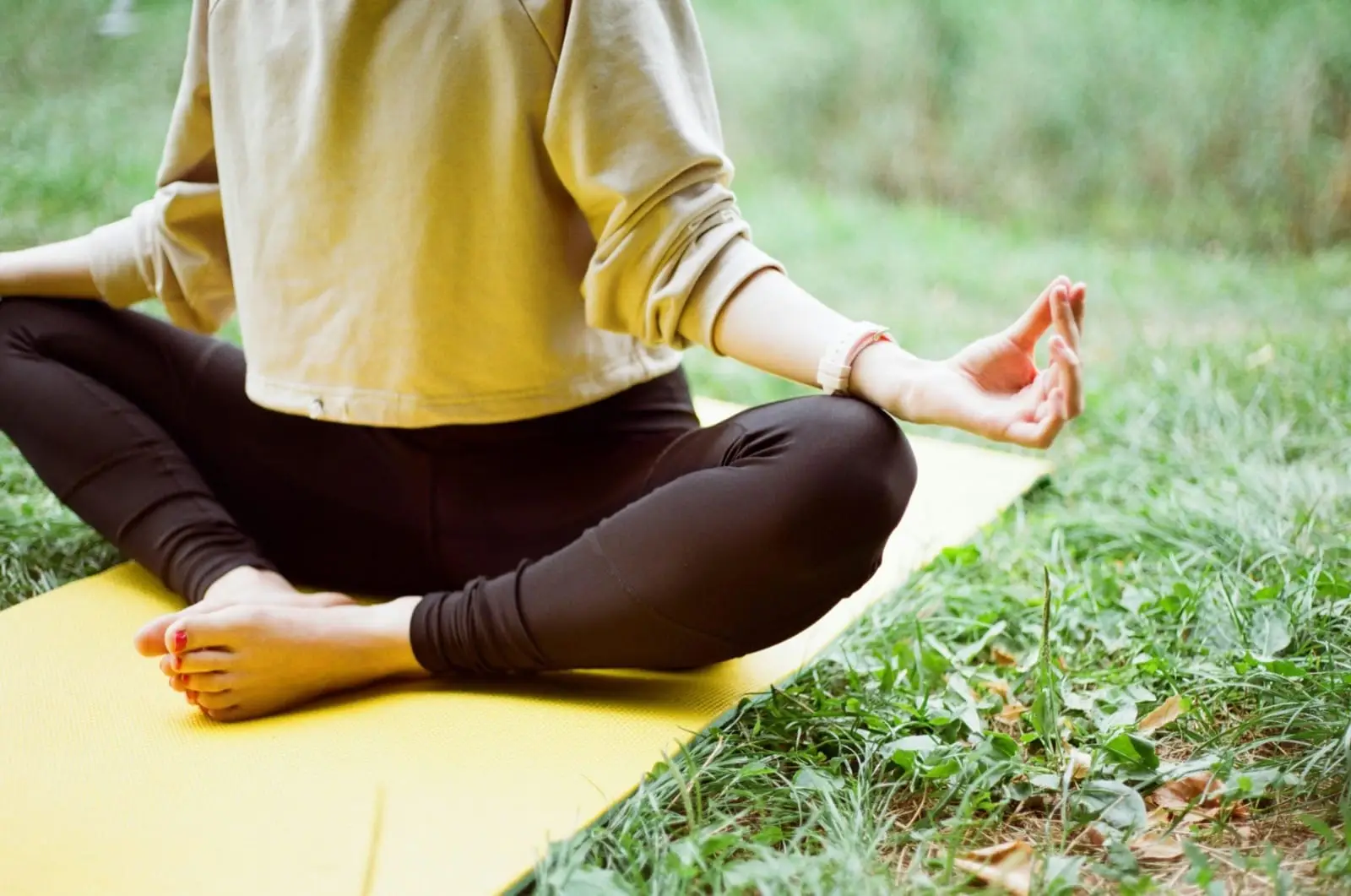
Meditation does not replace therapeutic support, but it can be a precious complement. By helping to regain a form of inner safety, it supports the healing process for people living with dissociation.
If you feel this kind of disconnection, or if it concerns someone close to you, know that it is possible to rebuild oneself gently. With patience, listening, and kindness, the path towards reconnection is accessible.
I share my YouTube page here, where you can listen to the meditations I have recorded. I also offer training to guide you in learning meditation — more information here.
Also worth reading:
👉 Understanding traumatic memory
👉 The benefits of mindfulness